1Climatologist, Economist
2Physicist
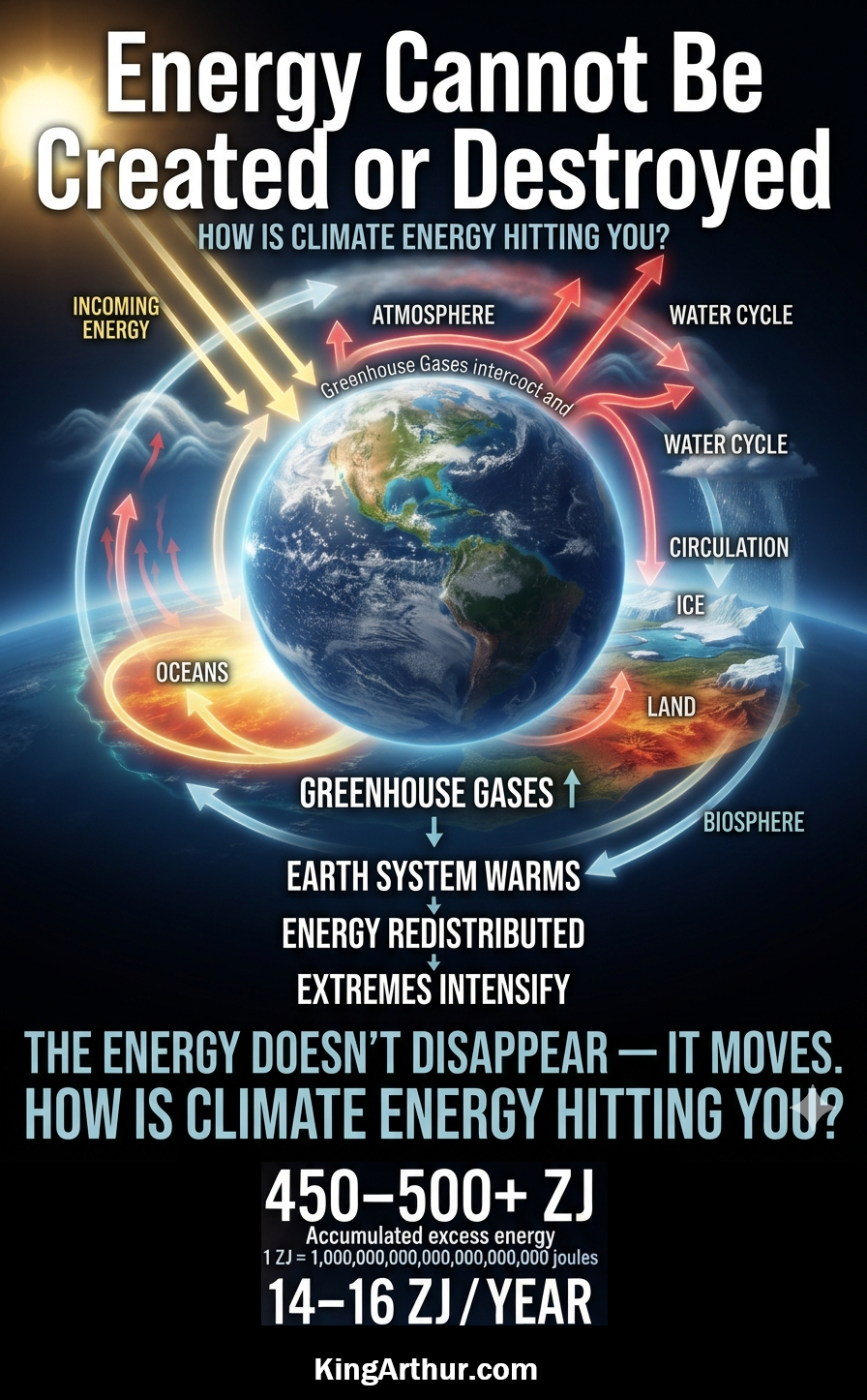
New to climate change? Explore the complexities of climate science through easy-to-understand graphics and explanations.
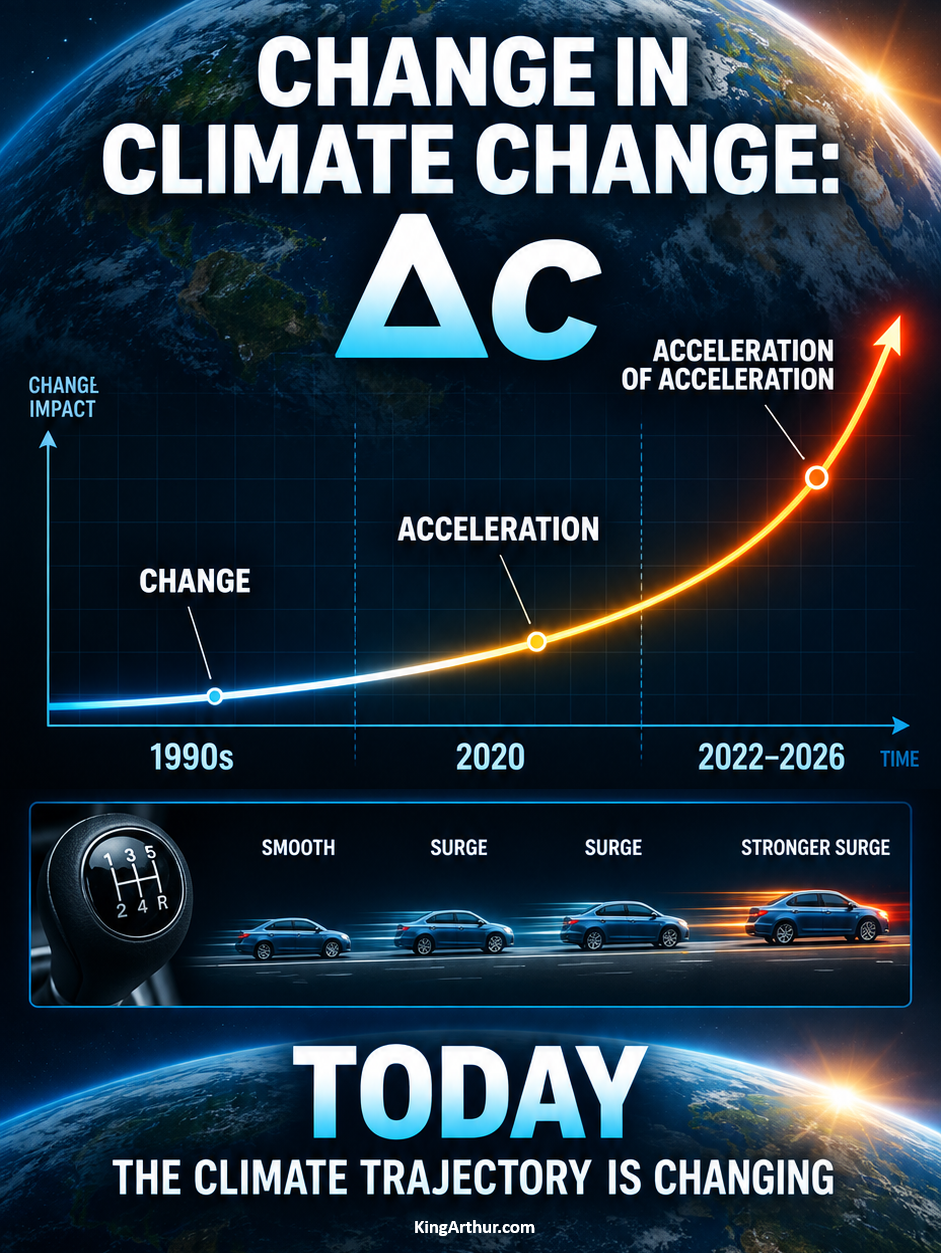
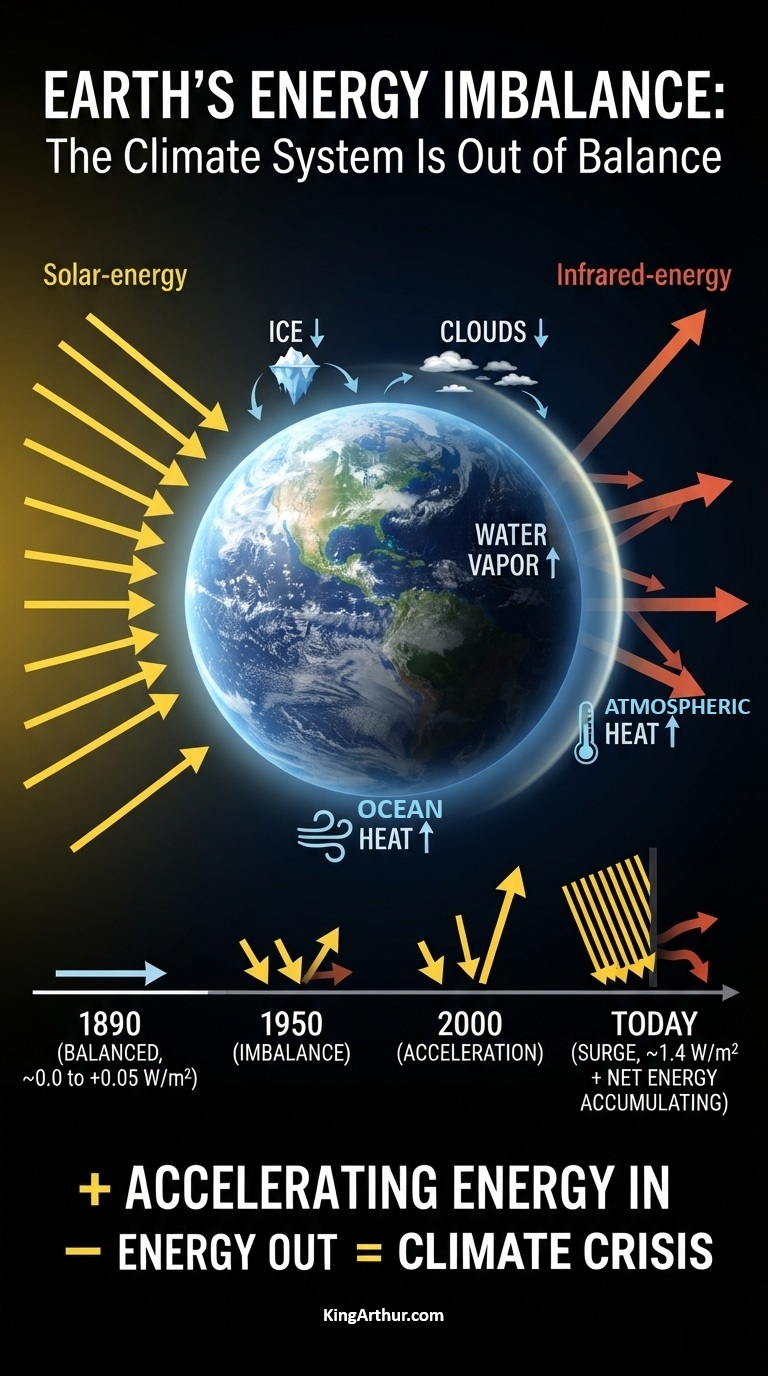
How Fast Is the Earth Warming?
What Are the Immediate Impacts?
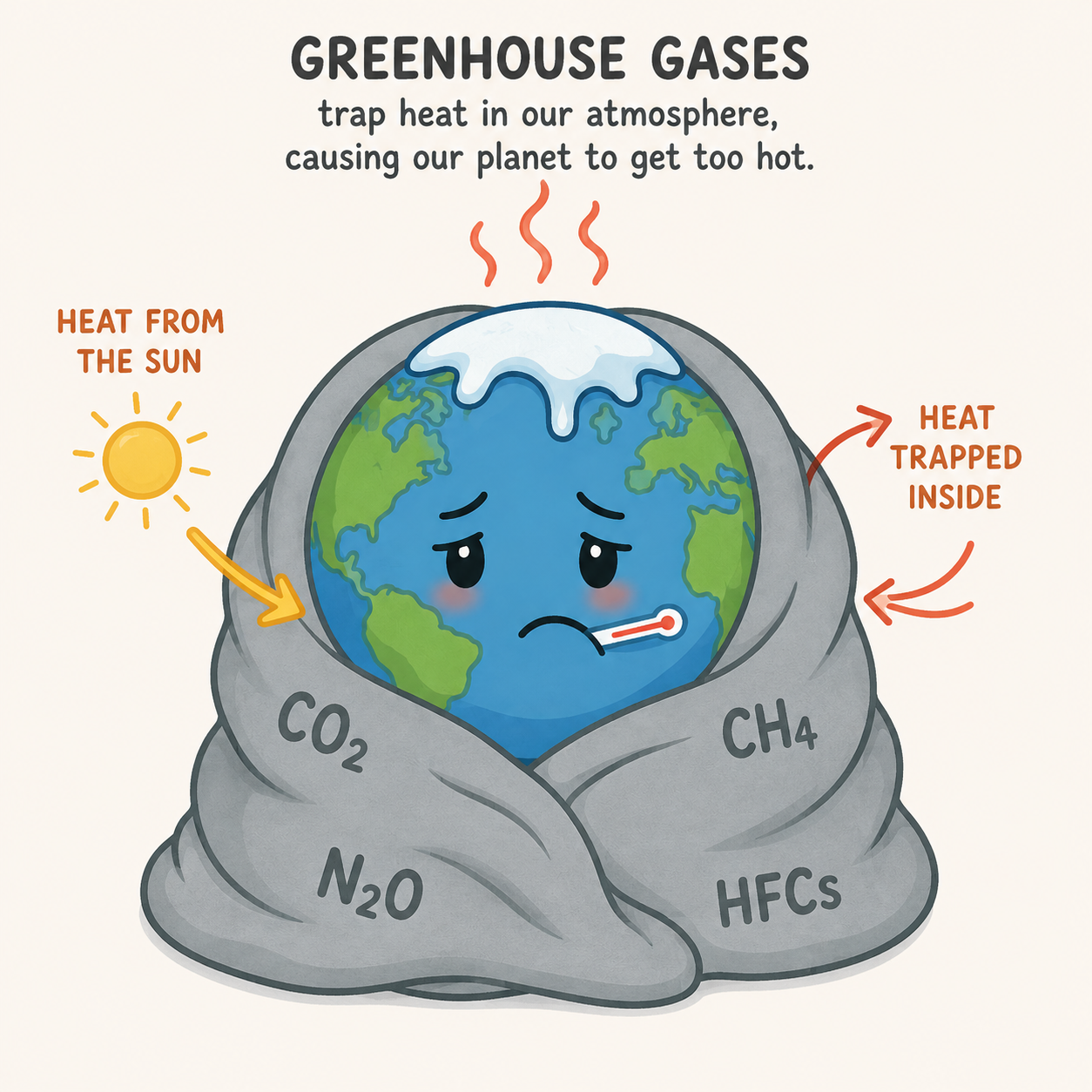
What Causes Climate Change?
For answers to these and other important questions, investigate “Climate Change Simplified: What Is Global Warming?”
Confused by climate change? Overwhelmed by the science? Not sure where to begin? No matter your level of literacy—or your level of climate knowledge—this is your guide to finding your way through the global warming galaxy.
Explore the science, evidence, feedbacks, risks, and real-world impacts of a changing climate from a human perspective.
Grab your towel. The journey begins here.
The Geological Society of London—the UK’s professional association for geologists, founded in 1807—puts the rate of modern climate change into geological perspective:
“...the current speed of human-induced CO₂ change and warming is nearly without precedent in the entire geological record, with the only known exception being the instantaneous, meteorite-induced event that caused the extinction of non-bird-like dinosaurs 66 million years ago.”
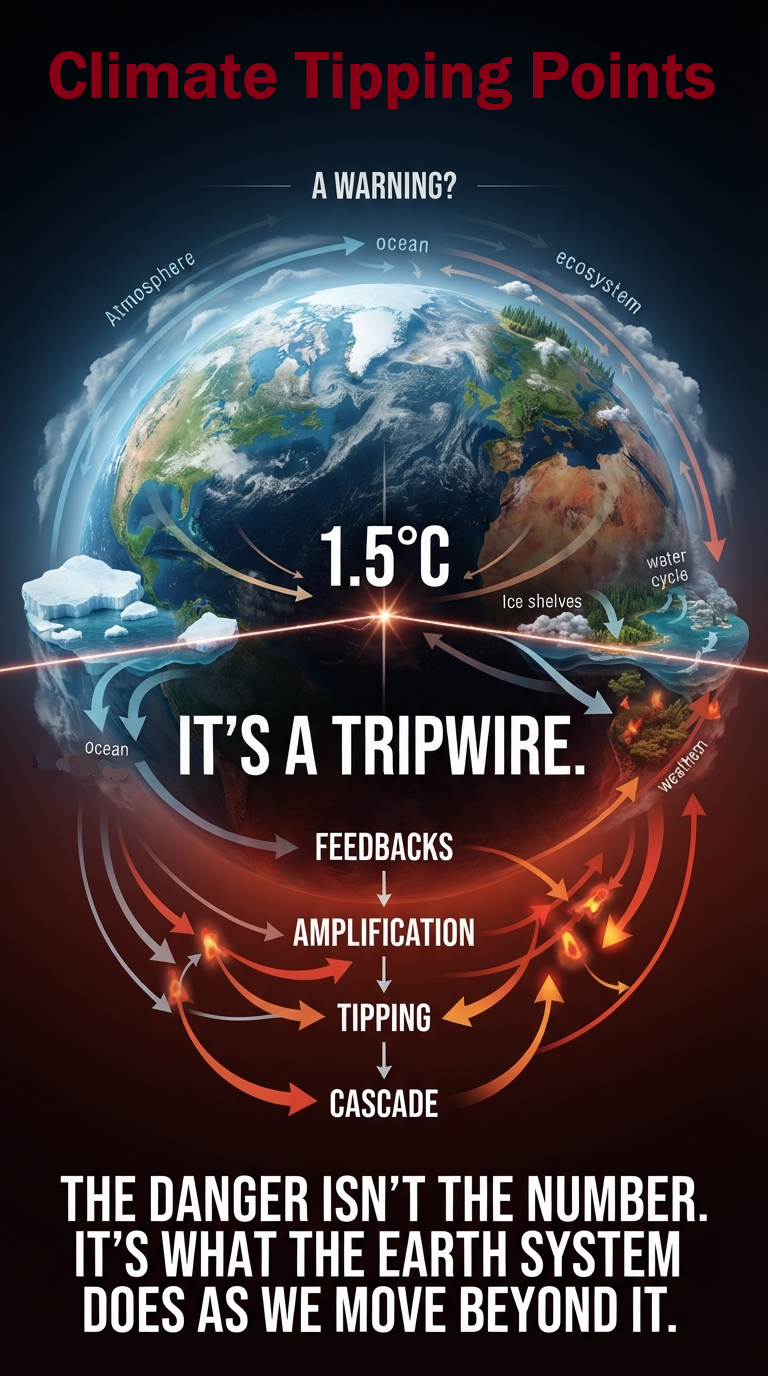
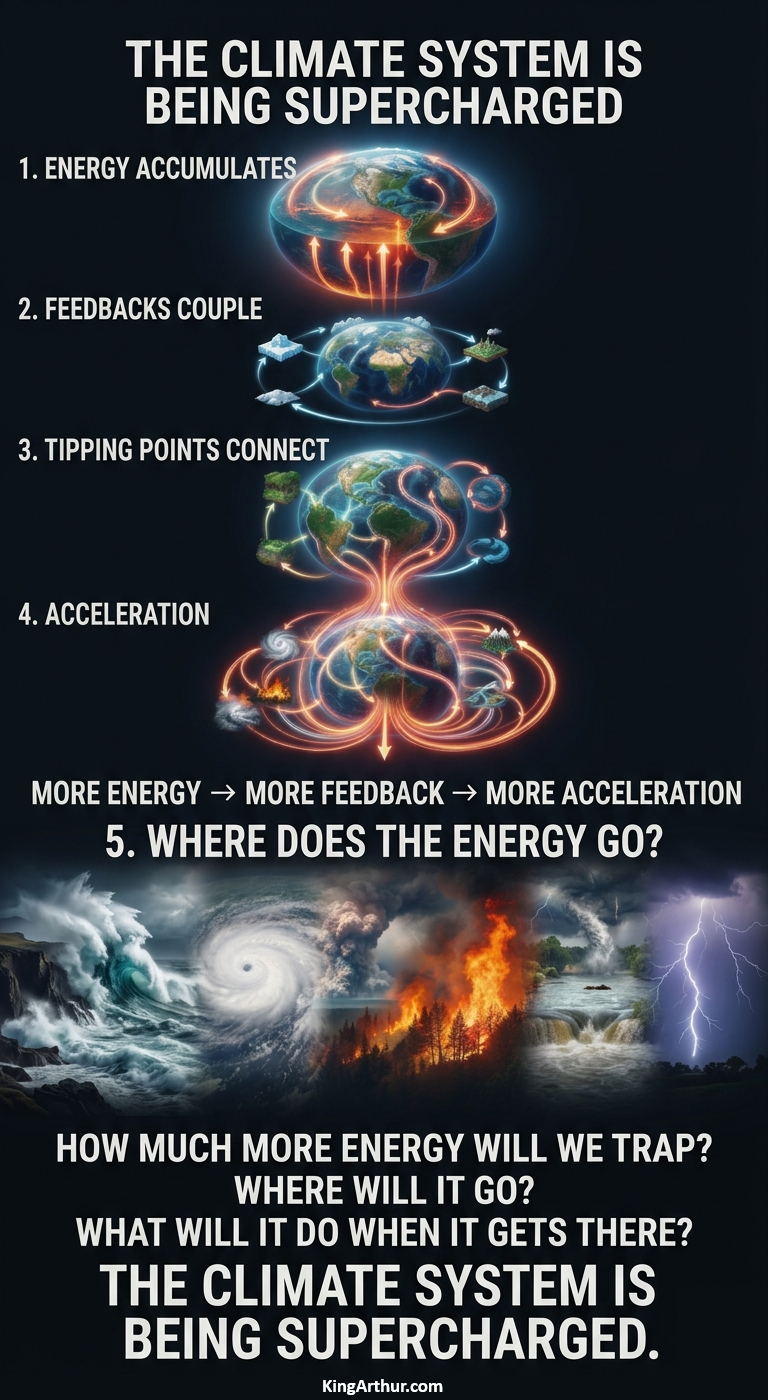
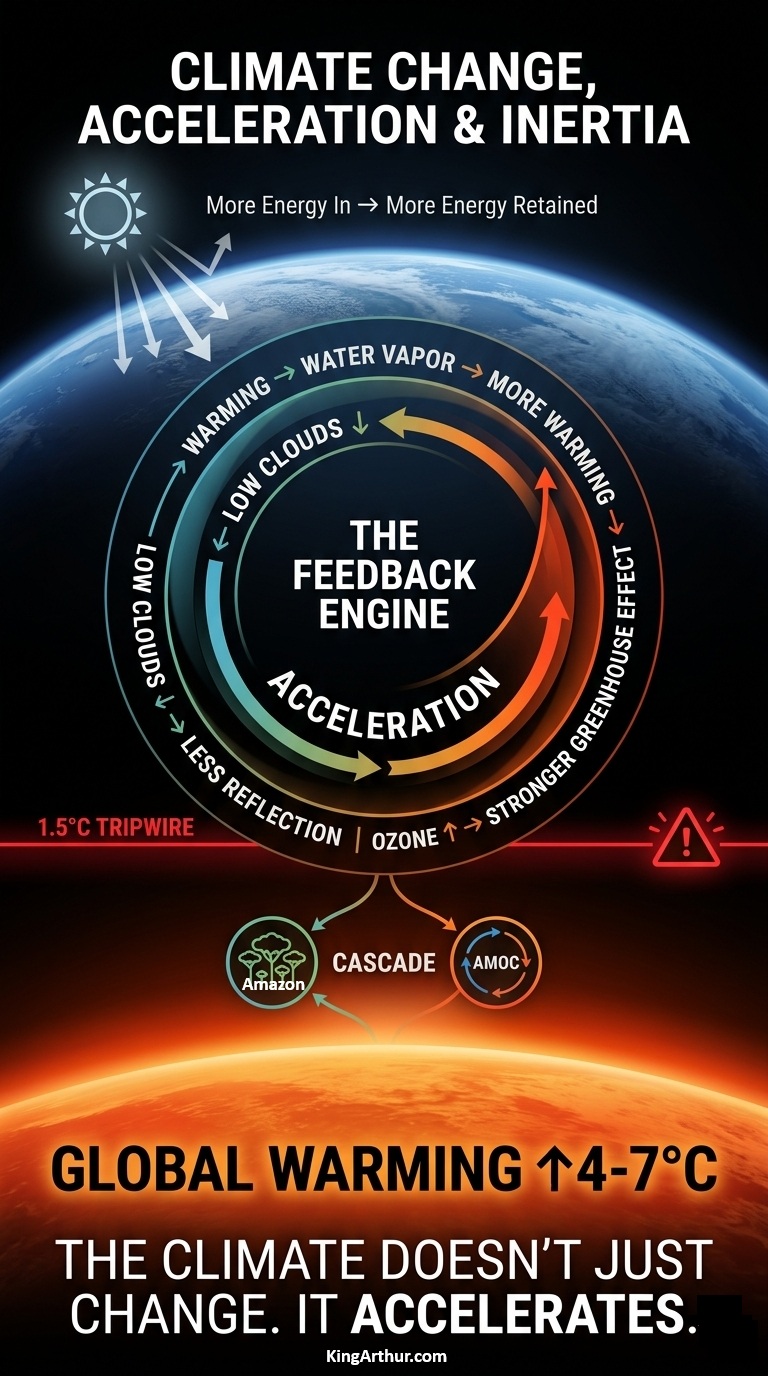
Feedback Loops → Tipping Points → Feedback Loop and Tipping-Point Network → Acceleration → Domino Effect
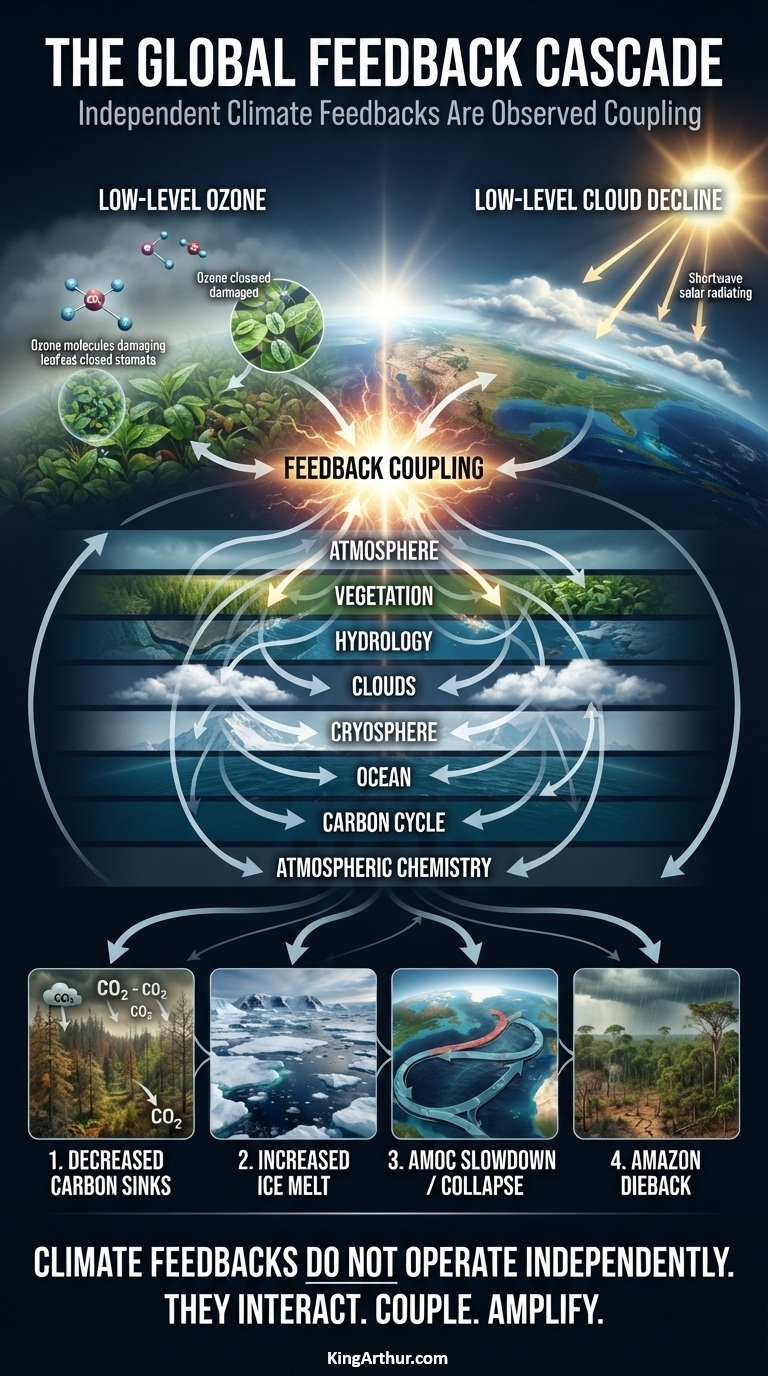
Feedback loops amplify climate change and can push interconnected Earth systems past critical tipping points. As tipping points are crossed, they can trigger additional feedback loops and destabilize other climate systems. This cascading "Domino Effect" compresses timescales, accelerates change, and increases the risk of rapid, nonlinear climate transformations.
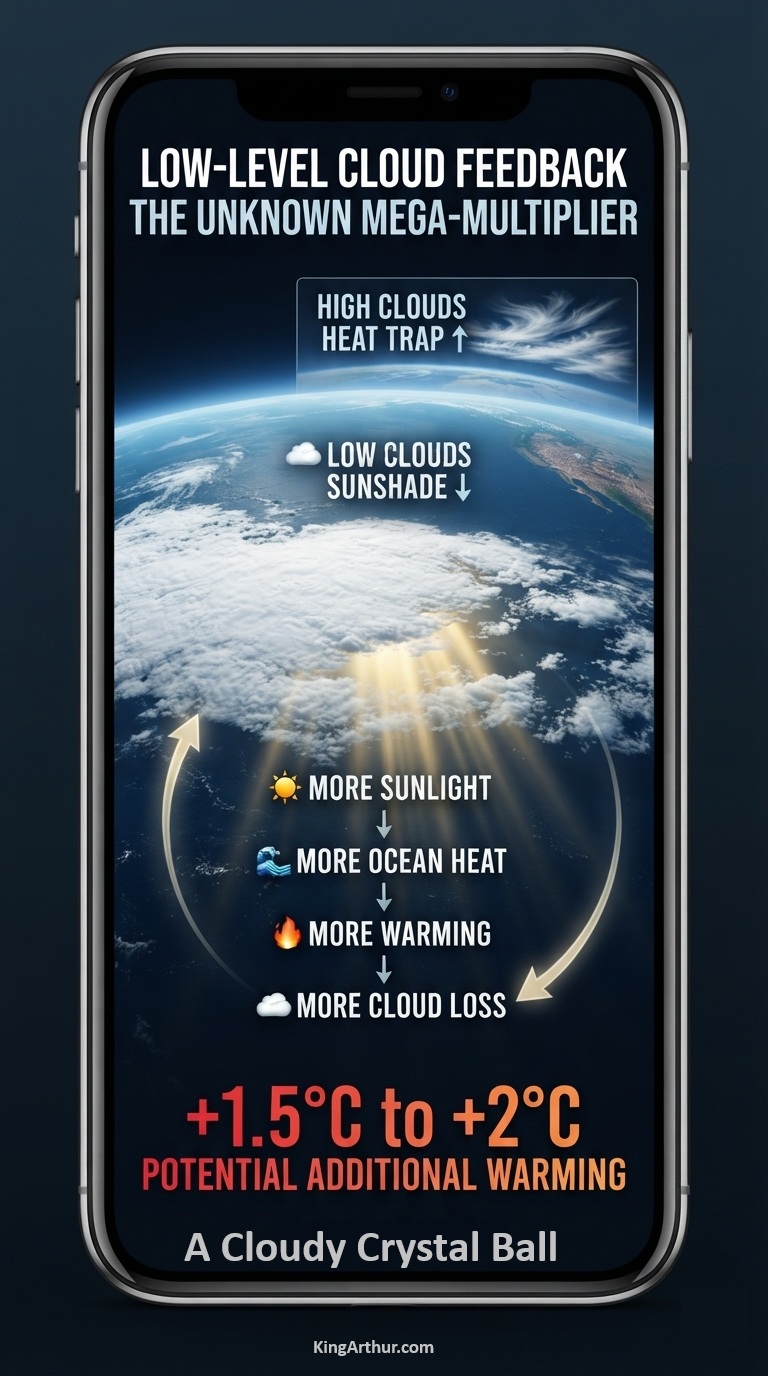
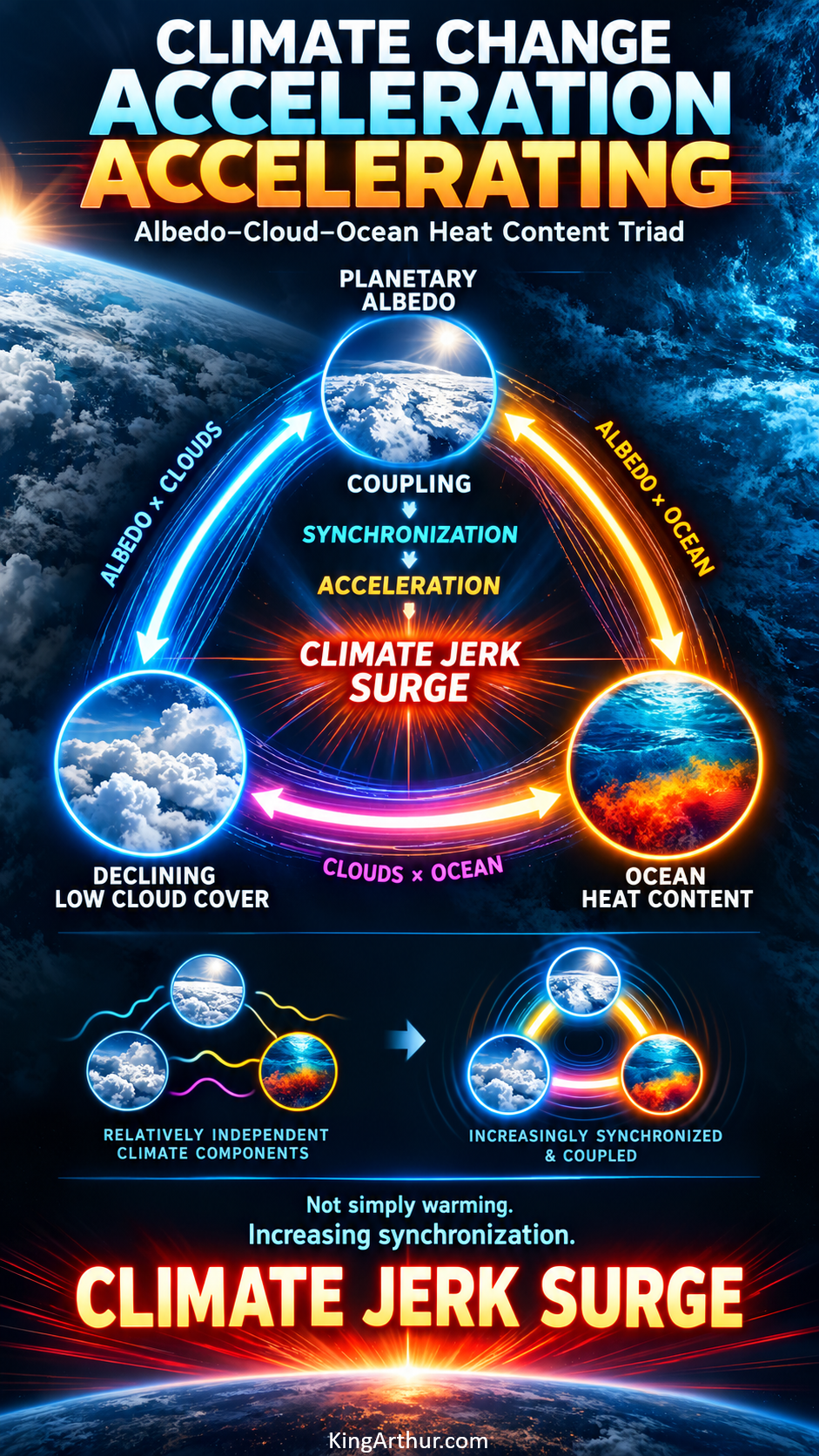
The most significant emerging climate feedback accelerating the planetary energy imbalance is the decline in low-level clouds.
Low-Level Cloud Overview
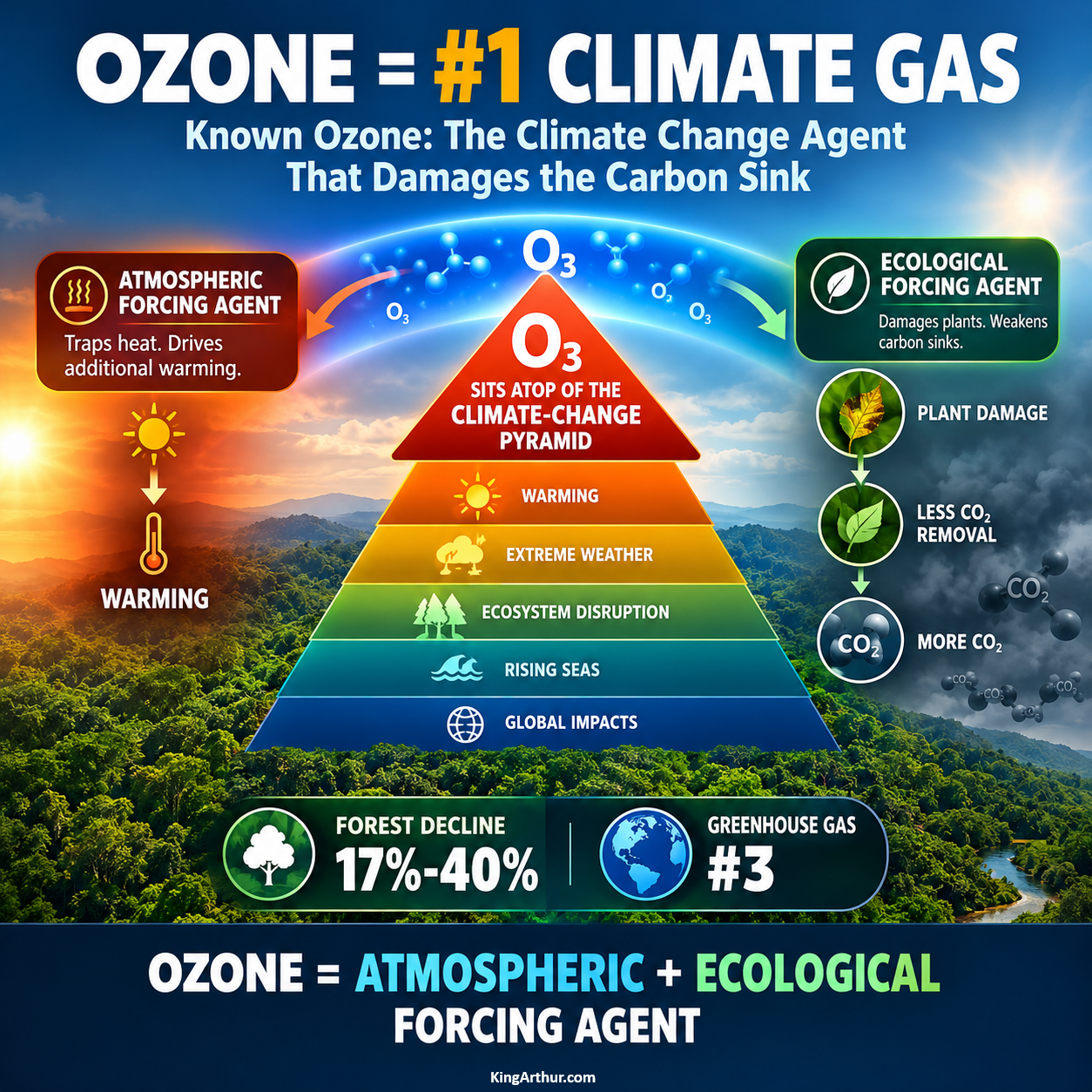
Low-Level Cloud Feedback: The Mega-Multiplier — An Additional 1.5°C to 2°C • Albedo–Cloud–Ocean Heat Content Feedback Triad (Climate Jerk Surge Math & Methods) • Feedback Loop and Tipping-Point Network • The Global Feedback Cascade: Ozone and Cloud Feedback Coupling • Low-Level Ozone – Clouds = Slowing AMOC and Collapse • Water Vapor + Clouds: Coupled Feedbacks Driving a Warmer Planet
Bottom line: The question is no longer how warm the planet becomes, but how life on Earth can endure when change outpaces our ability to adapt.
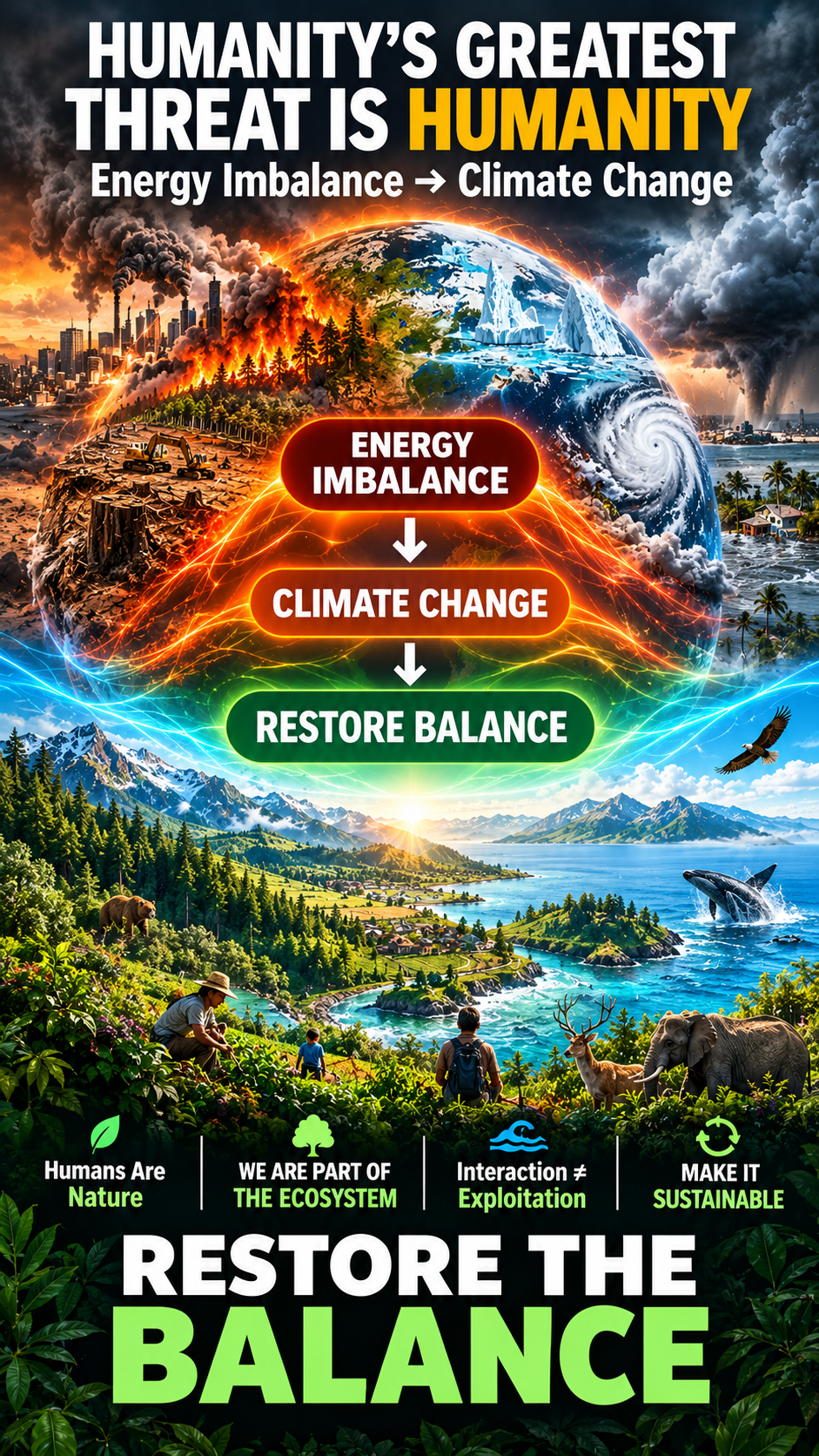
We cannot control the laws of physics, but we can control our pollution. The most effective action is to stop burning fossil fuels.
The only effective way to stop the acceleration of climate change is through the reduction of fossil-fuel combustion.
However, the most likely way of reversing the trajectory of climate change is through people using AI to develop previously unthought-of methods and technologies that can fundamentally change how we produce, consume, and manage resources—and potentially remove greenhouse gases from the atmosphere.
Read the full report: Why Do Scientists Use AI? From Computational Efficiency to Climate Innovation
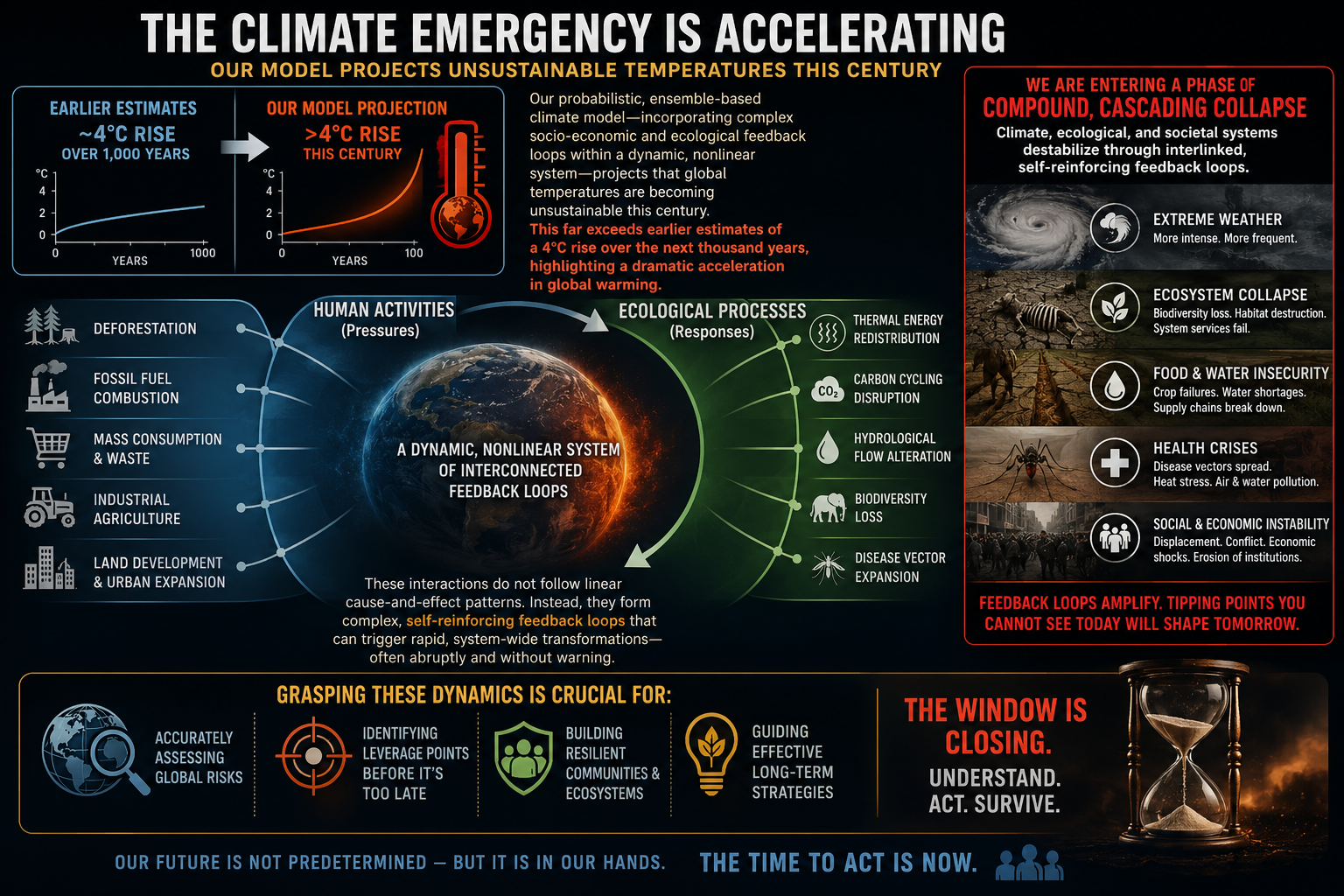
* Our probabilistic, ensemble-based climate model — which incorporates complex socio-economic and ecological feedback loops within a dynamic, nonlinear system — projects that global temperatures are becoming unsustainable this century. This far exceeds earlier estimates of a 4°C rise over the next thousand years, highlighting a dramatic acceleration in global warming. We are now entering a phase of compound, cascading collapse, where climate, ecological, and societal systems destabilize through interlinked, self-reinforcing feedback loops.
We examine how human activities — such as deforestation, fossil fuel combustion, mass consumption, industrial agriculture, and land development — interact with ecological processes like thermal energy redistribution, carbon cycling, hydrological flow, biodiversity loss, and the spread of disease vectors. These interactions do not follow linear cause-and-effect patterns. Instead, they form complex, self-reinforcing feedback loops that can trigger rapid, system-wide transformations — often abruptly and without warning. Grasping these dynamics is crucial for accurately assessing global risks and developing effective strategies for long-term survival.